It is the Islamic Hijri year 951. The Gregorian calendar knows it as 1544 CE. I am on my way to Kabul, laden with spices I plan to sell once there. I also have some silks I picked up on the way. It is a long journey from Delhi, but the profits would be better in Kabul instead of selling it to middlemen along the way. More Rupiyas.
However, I must confess just being on the road is an equal incentive. Distant lands, new stories, and the adventures, or should I say misadventures along the way. I chuckle as I recollect incidents. It’s my little secret. Being a wanderer in the guise of a trader.
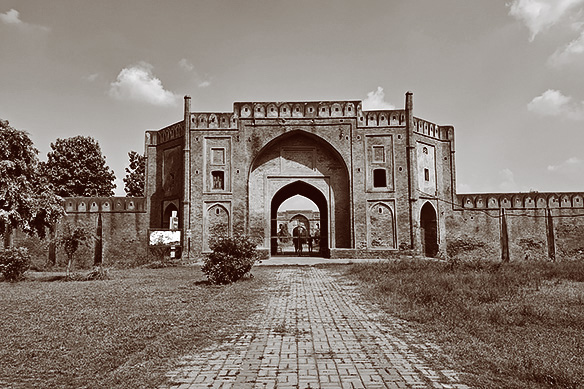
As the sun sets over the dusty plains, and the muezzin calls out the adhan for maghrib, our caravan weaves its way to the monumental fortified Shambhu caravanserai surrounded with lush green fields. It is our haven for the night—safe from the bandits who scavenge the dark roads once night falls.
I won’t need to pay, either for my own or my pack animals’ food and lodging. Our Sultan Sher Shah Suri, a Hindustan-born Afghan who had defeated and ousted Mughal Emperor Humayun four years ago, takes care of it all. Widely recognized as an able general and administrator, he has built 1,700 such serais along the 2,500-kilometre-long Sadak-e-Azam [Grand Road], connecting the Bay of Bengal to the Hindu Kush Mountains.
The road itself is older, dating back to Chandragupta Maurya in the 4th Century BCE who named it Uttarapatha. Sher Shah Suri expanded it into one of South Asia’s longest trade routes across his vast realm and punctuated it with inns, wells, and kos minars [distance markers]. With my own eyes I have seen him transform the ancient Mauryan artery into the blueprint of Hindustan’s first ever postal service, and eased trade along its length with the standardised currency he has introduced: the Rupiya.
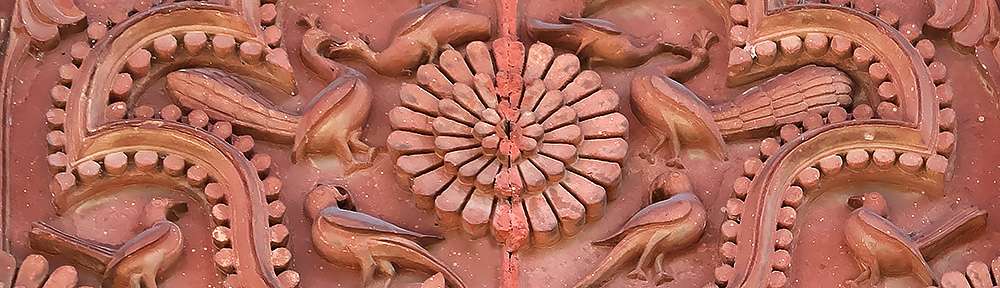
![Left: Detail of glazed tile mosaic on Dakhni Caravanserai's main gateway [1640 CE], Jalandhar; Right: Kos Minar, marker of a kos [2 miles], outside Dakhni Caravanserai, flags the turnoff for Kashmir.](https://ramaarya.blog/wp-content/uploads/2026/10/dakhni-caravanserai-5.jpg)
Left: Detail of glazed tile mosaic on Dakhni Caravanserai’s main gateway [1640 CE], Jalandhar; Right: Kos Minar, marker of a kos [2 miles], outside Dakhni Caravanserai, flags the turnoff for Kashmir.